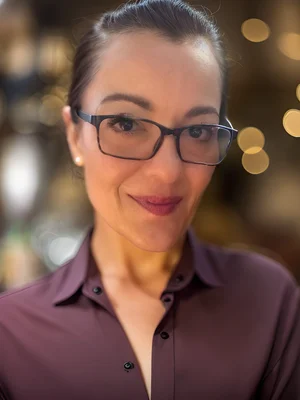
My Journey with hEDS, POTS & MCAS
How Living with These Conditions Made Me a Better Therapist
For most of my career, I knew I approached the body differently than many trainers and massage therapists. I couldn't always explain why. I simply saw patterns that others seemed to miss.
When someone walked into my studio complaining of shoulder pain, I wasn't just looking at the shoulder. I was looking at how they stood.
How they breathed.
How they balanced.
How their nervous system responded to movement.
How their body compensated from head to toe.
Years later, everything finally made sense. I discovered I had hypermobile Ehlers-Danlos syndrome (hEDS), Postural Orthostatic Tachycardia Syndrome (POTS), and Mast Cell Activation Syndrome (MCAS). Together, these conditions are often called the "zebra trifecta."
Receiving those diagnoses didn't suddenly make me a better therapist. They explained why I had spent decades searching for answers that most people never need to ask.
Living in a Different Body
When you live with hypermobility, your joints don't always provide the stability most people take for granted. Your muscles work overtime. Your nervous system is constantly gathering information. Simple activities can require far more effort than they appear to.
POTS can make standing feel like exercise. MCAS can make your body react unpredictably to stress, foods, medications, temperature, or environmental triggers.
On paper, they're three separate diagnoses. In real life, they're deeply connected. Every day, your body is working harder simply to maintain what many people consider normal. Living in that body changes the way you see every other body.
My Greatest Teacher Was My Own Body
People often ask where I learned so much about posture, movement, chronic pain, and nervous system regulation.
The answer is simple.
Part of it came from more than two decades of professional education and ep. The rest came from living it. When your shoulder is unstable, you don't just study shoulder mechanics. You feel them. When your nervous system is overwhelmed, you don't just read about regulation. You spend years learning what actually helps.
When you have to build stability every single day, you begin to understand that strength is much more than lifting weights.
It's control. It's awareness. It's precision.
That perspective cannot be learned from a weekend certification.
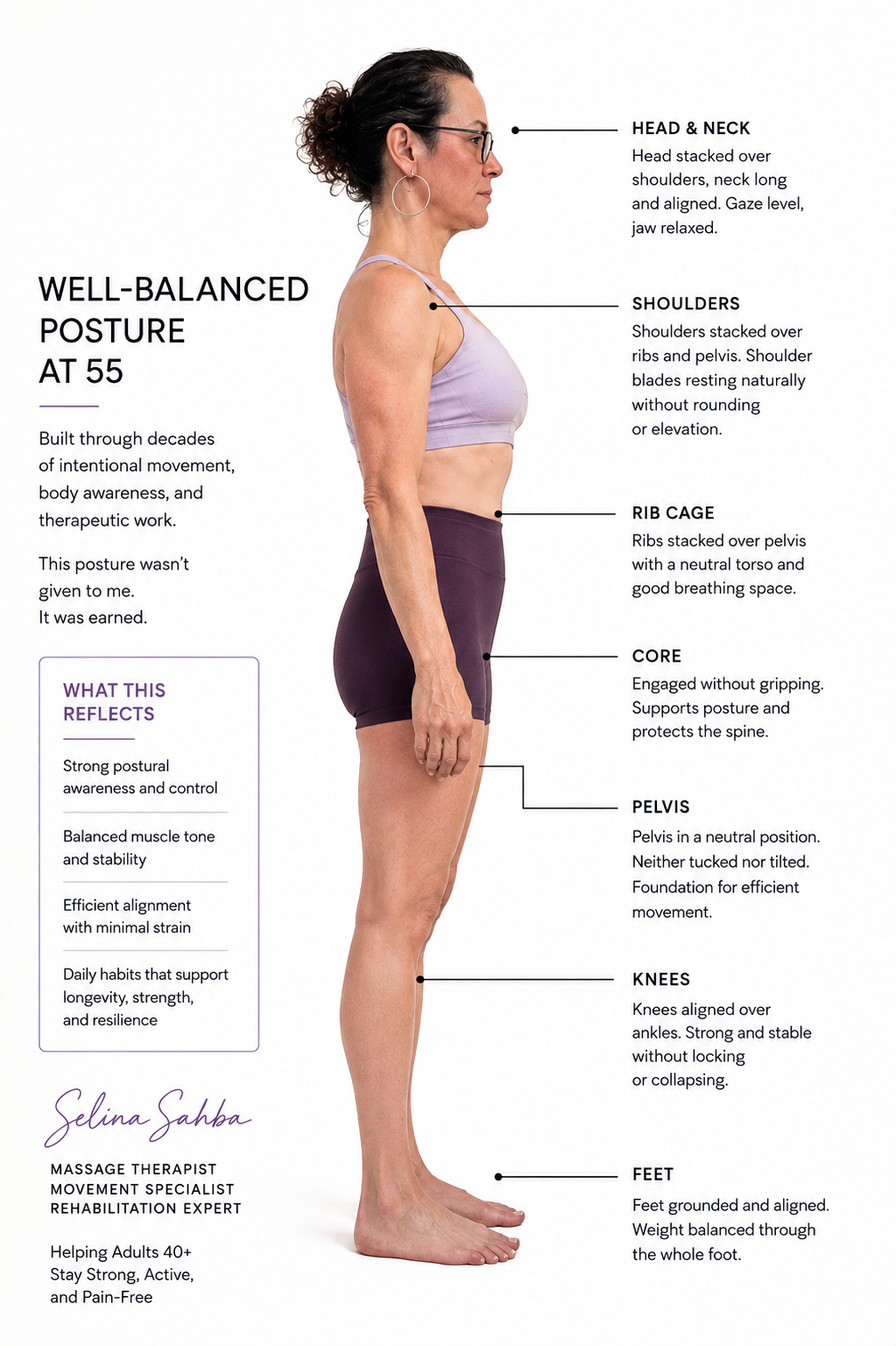
Why My Posture Matters
I'm often asked how I maintain the posture I do at 55.
The answer surprises people.
It isn't because my body is naturally stable.
It's the opposite.
My connective tissue is naturally more flexible than it should be.
The posture you see today is the result of thousands of hours spent learning how to create stability through movement, strength, breathing, body awareness, and consistency.
Every exercise I teach has been tested on the most challenging body I've ever worked with.
My own. That doesn't mean I have all the answers. It means I understand the process.
The Day Everything Came Together
A client came to see me recently after struggling with chronic fatigue syndrome and MCAS.
She had already seen other practitioners. As we talked, I mentioned that I also live with MCAS.
She began to cry. For the first time, she felt understood. Not pitied. Understood.
That moment reminded me of something I've been doing for years without realizing it.
People don't just come to me because I know anatomy.
They come because they finally feel like someone understands what it's is like to live in a body that doesn't always follow the rules.
Why My Approach Is Different
Every client is unique. Not everyone who comes to me has hEDS, POTS, or MCAS. But many have chronic pain, recurring injuries, joint instability, persistent muscle tightness, or a nervous system that never seems to relax. Rather than chasing symptoms, I look for patterns.
How is the body creating stability? Where is it compensating?
Is the nervous system driving muscle tension? Is flexibility actually the problem, or is the real issue a lack of control?
Those questions shape every treatment.
More Than Massage
Massage is one tool. Movement is another. Education is another.
Sometimes your body needs soft tissue work. Sometimes it needs stability. Sometimes it needs reassurance that it's safe to let go.
Understanding the difference is where experience matters.
My Goal
I can't promise to eliminate every ache or every diagnosis. What I can promise is this. When you walk into my studio, you'll be seen as a whole person, not a collection of symptoms. My goal isn't simply to help you feel better for a day.
It's to help you understand your body, move with greater confidence, and build resilience for years to come.