If you have a stiff neck, a sore back, or a shoulder that never seems to loosen up, you may be wondering whether fascia-focused massage could help. After 24 years of hands-on work, it is one of the approaches I return to often—not because it is a miracle fix, but because slow, attentive bodywork can be a useful part of helping people move with more comfort.
Fascia is connective tissue found throughout the body. It surrounds and supports muscles and other structures, helping tissues connect and move in relation to one another. Since the body works as a connected system, discomfort in one area can sometimes influence how you move or feel elsewhere.
That does not mean every ache has a fascial cause. It does mean I look beyond the spot that hurts and pay attention to how the surrounding areas move and respond.
What happens during fascia-focused massage?
You may see massage described as “breaking up adhesions” or “breaking down scar tissue.” That is not how I explain my work.
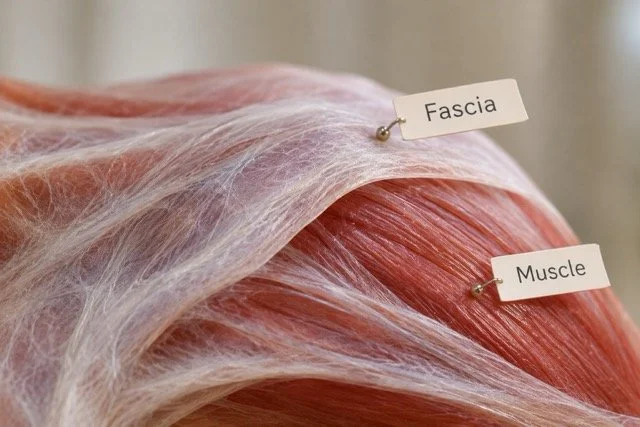
Fascia is strong, and the hands-on pressure used in massage is not literally tearing it apart.
A mathematical model published in 2008 estimated that very large forces would be needed to produce even small deformations in dense tissues such as the fascia lata and plantar fascia. The study does not explain every effect of massage, but it challenges the idea that a therapist is physically forcing dense fascia to release.
My approach uses slow, sustained contact and gentle stretching. I think of that touch as information for the nervous system: it gives you time to notice an area and, if it feels safe, reduce some of the guarding around it. Researchers have proposed that sensory input from fascia may influence muscle tone, but the exact mechanisms behind hands-on “release” are still being studied.
The sensation of softening or moving more easily can be real, even if the explanation is more complex than a therapist breaking apart tissue. Pressure should feel manageable. You should not need to brace, hold your breath, or push through pain.
What does the research say?
Research on myofascial release is promising in some areas, but it is not equally strong for every condition. I want you to have the honest version.
A 2021 systematic review combined eight randomized trials involving 375 people with chronic low back pain. It found improvements in pain and physical function, but not clear improvements in quality of life, balance, or mental-health measures. The authors also noted that the evidence was limited by the small number and quality of studies. Those results are encouraging, but they do not guarantee the same outcome for every person or prove that massage alone is the right treatment.
Cleveland Clinic describes myofascial release as a gentle, sustained form of hands-on work and notes that research is less extensive than for some other massage approaches. Potential benefits may include pain relief, easier movement, and relaxation, while some people experience temporary soreness.
My takeaway: fascia-focused massage can be one helpful tool. It is not a substitute for medical assessment, and it often works best alongside appropriate movement and other care.
Potential benefits people seek
People come in with different goals. Depending on your situation, fascia-focused massage may support:
More comfortable movement. You may find it easier to reach overhead, turn your head, or bend for everyday tasks.
A sense of reduced tension. Slow, comfortable pressure can help some people feel less guarded or wound up.
Short-term relief from aches and stiffness. The research is most promising for chronic low back pain, though results vary and are not guaranteed.
Support alongside movement training. Hands-on work can be paired with simple, appropriate movement so you can explore a comfortable range afterward.
A calmer session experience. The pace is unhurried, and many clients find the time relaxing.
Massage is not a diagnosis or a cure. If you have ongoing pain, it is worth discussing your symptoms with a qualified healthcare professional.
Who might consider it?
Clients often ask about fascia-focused massage when they are dealing with persistent stiffness or restricted movement around the neck, shoulders, back, hips, or jaw. Some also ask about gentle work around an older, healed scar. If you are recovering from surgery or an injury, get clearance from your healthcare provider first; work should never be performed over a fresh incision or an area that has not healed.
New, severe, or worsening symptoms deserve medical attention before bodywork. Massage may be appropriate as part of a broader plan, but it should not delay an assessment.
What does a session feel like?
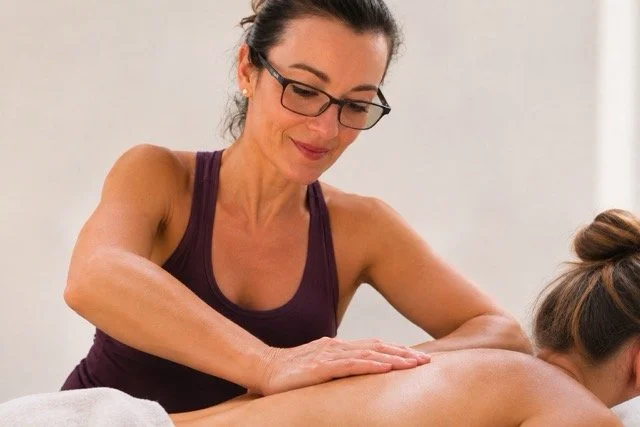
If you are used to deep tissue massage, this may feel different. I typically use little or no oil so I can work with the skin and underlying layers rather than glide quickly across them. Pressure is slow and sustained. I may stay with one area for a short time and adjust based on what you feel.
You might notice stretching, warmth, tenderness, or a gradual sense of ease. Tell me what you are experiencing as we go. The work should stay within a level of pressure you can comfortably breathe and relax through.
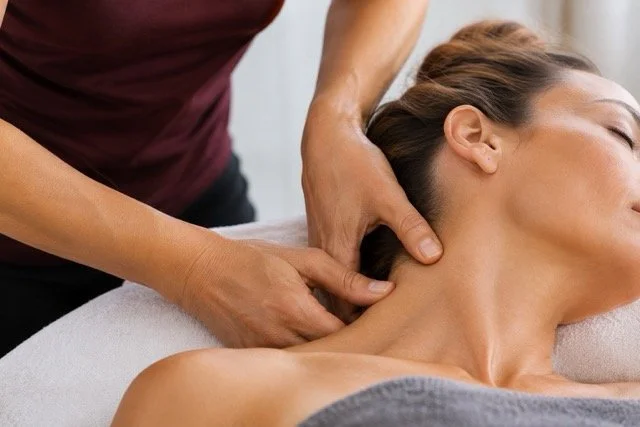
Because I also have a background in corrective exercise, I may finish with a simple movement that fits your goals. Bodywork can create an opportunity to move differently; practicing comfortable movement afterward may help you explore that change.
For clients who want both in one appointment, the Half & Half session combines targeted movement work with massage.
Fascia-focused massage, deep tissue, and foam rolling
These approaches can overlap, but they are not identical:
Fascia-focused massage usually involves slow, sustained contact, gentle stretching, and little or no lubricant. The pressure is adjusted to your comfort.
Deep tissue massage often uses firmer, more focused strokes to work on areas of muscle tension. The pace and pressure can vary.
Foam rolling is self-applied pressure using your body weight. It can be a practical tool between appointments, and you control how much pressure to use.
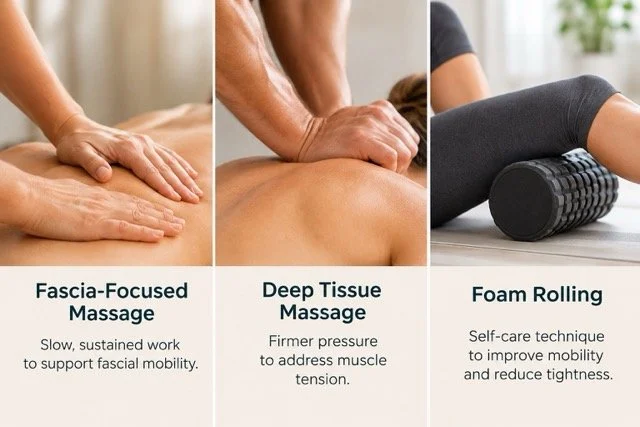
There is no single technique shared by every provider. I may blend myofascial techniques with other therapeutic massage approaches depending on your goals. A therapist can adjust the work in response to your feedback; foam rolling gives you more direct control at home.
How many sessions might you need?
There is no universal schedule. Your goals, health history, response to treatment, and other parts of your care all matter. Some people notice a short-term difference after one visit. Longer-lasting changes, when they occur, may take more than one session—and results are not guaranteed.
In my practice, a reasonable starting point for a specific issue may be one session a week for three or four weeks, followed by a reassessment. For long-standing tension, we might begin every one to two weeks and adjust from there. Maintenance visits are a personal choice, not a requirement. These are starting points for discussion, not a treatment prescription or a schedule established by research.
The movement and self-care you do between visits matter, too. We can talk about what is realistic for you.
What should you do after a session?
Most people can return to their usual routine, guided by how they feel. If an area is mildly tender, choose comfortable movement and wait until it settles before doing an especially demanding workout. There is no special “detox” or recovery routine you need to follow.
Pay attention to practical changes—such as how turning your head or getting out of the car feels—and let me know what you notice at your next visit. If pain is strong, lasts longer than expected, or new symptoms appear, contact me and consider checking with your healthcare provider.
When should you check with a healthcare provider first?
Let me know before booking or beginning a session if you have an open wound, burn, fresh incision, recent fracture, fever or active infection, a history of blood clots, or take blood-thinning medication. Some situations may simply call for adjusting the session; others need medical guidance first. New or spreading numbness, tingling, or weakness should be assessed by a healthcare professional rather than treated as ordinary muscle tightness.
Common questions
Does fascia-focused massage hurt?
It should not make you brace or push through pain. You may notice stretching or some tenderness, but tell me if the pressure feels uncomfortable so I can adjust it.
Is myofascial release the same as deep tissue massage?
No. They can be combined, but fascia-focused work is generally slower and uses sustained contact. Deep tissue massage often uses firmer, more focused strokes. The exact approach varies by therapist.
Can it help with headaches?
Some people seek massage for tension around the neck, shoulders, or jaw. Headaches can have many causes, and massage is not a diagnosis or a guaranteed treatment. If a headache is new, severe, changing, or persistent, check with your healthcare provider.
Will I be sore afterward?
Temporary tenderness can happen. It should ease rather than worsen. If soreness is significant or does not settle, let me know and seek medical advice as appropriate.
Can I combine massage with exercise?
Yes, when it is appropriate for you. I often pair bodywork with simple movement, and my Specialized Movement Training and Half & Half sessions are designed to bring hands-on work and movement together.
Do I need to be cleared after surgery or an injury?
If you are recovering from surgery or an injury, ask your healthcare provider whether and when bodywork is appropriate. Do not book work over a fresh incision, an unhealed injury, or an area your clinician has advised you to protect.
Interested in fascia-focused massage in Pacific Grove?
If you have been stretching or foam rolling and still feel limited, a one-on-one session may be worth discussing. Tell me what feels restricted and what you would like to get back to doing. We can choose an approach that fits your goals and comfort level.
Selina’s Therapy Center is at 620 Lighthouse Ave, Suite 165, Pacific Grove, California, serving clients across the Monterey Peninsula. Book online through Fresha or explore bodywork services.
Selina Sahba, CMT, NASM-CPT, CHEK Practitioner Selina’s Therapy Center
Sources and further reading
Chaudhry H, Schleip R, Ji Z, et al. Three-dimensional mathematical model for deformation of human fasciae in manual therapy. Journal of the American Osteopathic Association. 2008;108(8):379–390.
Schleip R. Fascial plasticity: a new neurobiological explanation, Part 1. Journal of Bodywork and Movement Therapies. 2003;7(1):11–19.
Wu Z, Wang Y, Ye X, et al. Myofascial release for chronic low back pain: a systematic review and meta-analysis. Frontiers in Medicine. 2021;8:697986.
Cleveland Clinic. Myofascial Release Therapy. Medically reviewed; last updated August 15, 2022.