You stretch your calves. You massage your shoulders. Your neck feels better for a while—then the familiar tightness returns.
After more than 20 years of working with clients through massage therapy, bodywork, and personal training, I've seen this pattern often. Some clients exercise regularly; others spend much of their day sitting. Their routines differ, but their question is the same: Why do these muscles keep feeling so tight?
My first step is to look beyond the area that hurts. I want to understand how the person stands, walks, moves, and breathes—and what demands those habits place on their body.
The muscle that feels tight may need attention. It may not be the only place that needs attention.
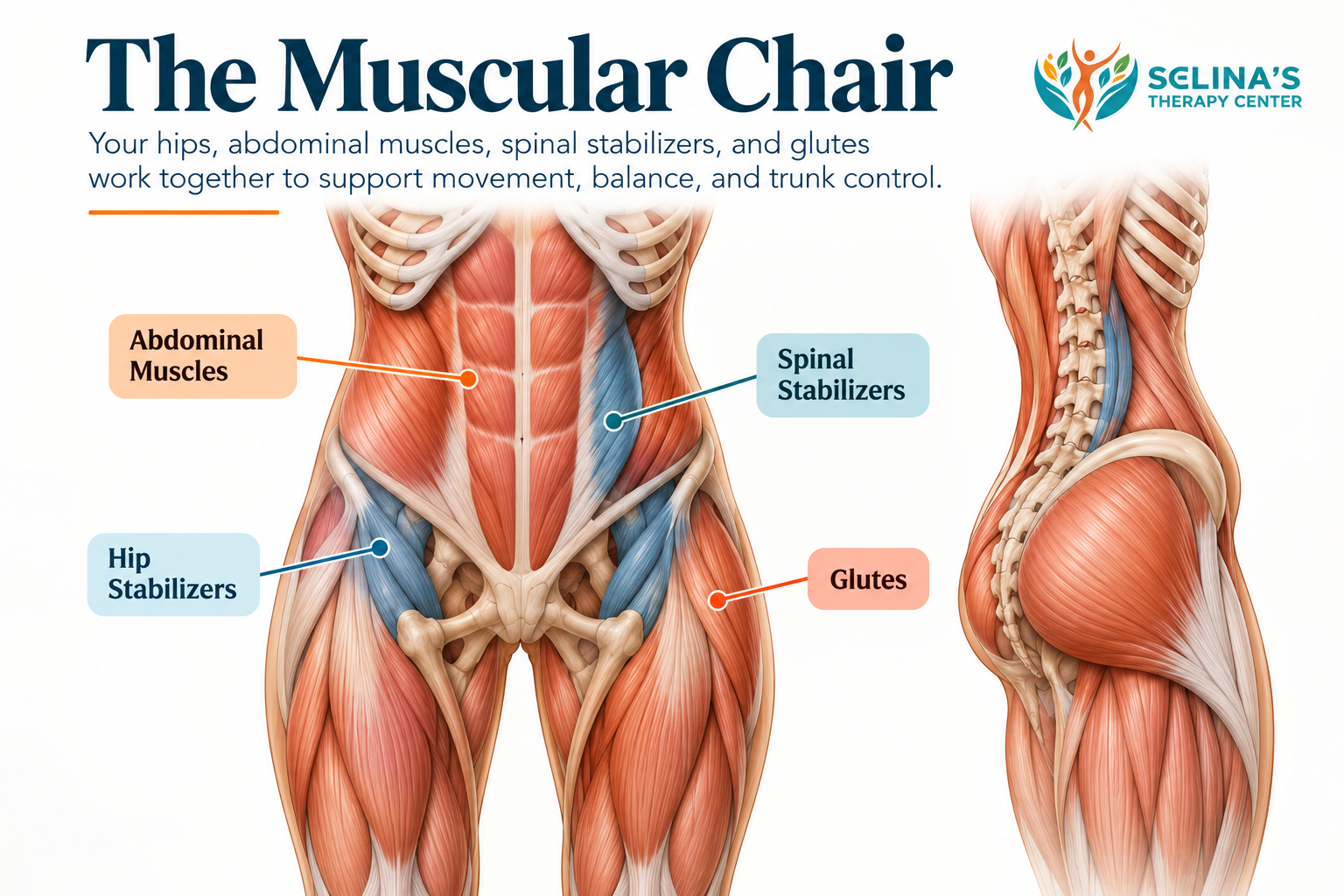
The “Muscular Chair”: Looking at What Happens in Between
I use the phrase muscular chair to describe the support system between the knees and lower rib cage. It includes the glutes, hip stabilizers, abdominal muscles, and muscles supporting the spine.
This is a teaching metaphor, not a diagnosis. It helps clients picture how their hips, pelvis, and trunk work together to support movement.
When you stand or walk, your body distributes effort across many muscles. Your calves help control your ankles. Your hips and trunk help manage balance and movement. Your neck muscles position and support your head.
In some clients, I notice a heavy reliance on certain areas while the hips and trunk appear to contribute less effectively. That observation doesn't establish the cause of their symptoms, but it gives us something useful to explore.
Spending long hours sitting can leave fewer opportunities for varied movement, especially when overall activity is low. It doesn't literally switch your glutes or core off. And regular exercise doesn't necessarily tell us how comfortably or effectively you move throughout the rest of your day.
I'm interested in both strength and coordination: not just what a muscle can do, but how it works with the rest of the body.
Why I Look Beyond Tight Calves
Your calves do more than help you push off when you walk. They also help control the small adjustments at your ankles that keep you balanced while standing.
But the ankles aren't working alone. Balance also involves the knees, hips, and trunk. If someone relies heavily on an ankle-based strategy, I want to understand whether other parts of the body could share those demands differently.
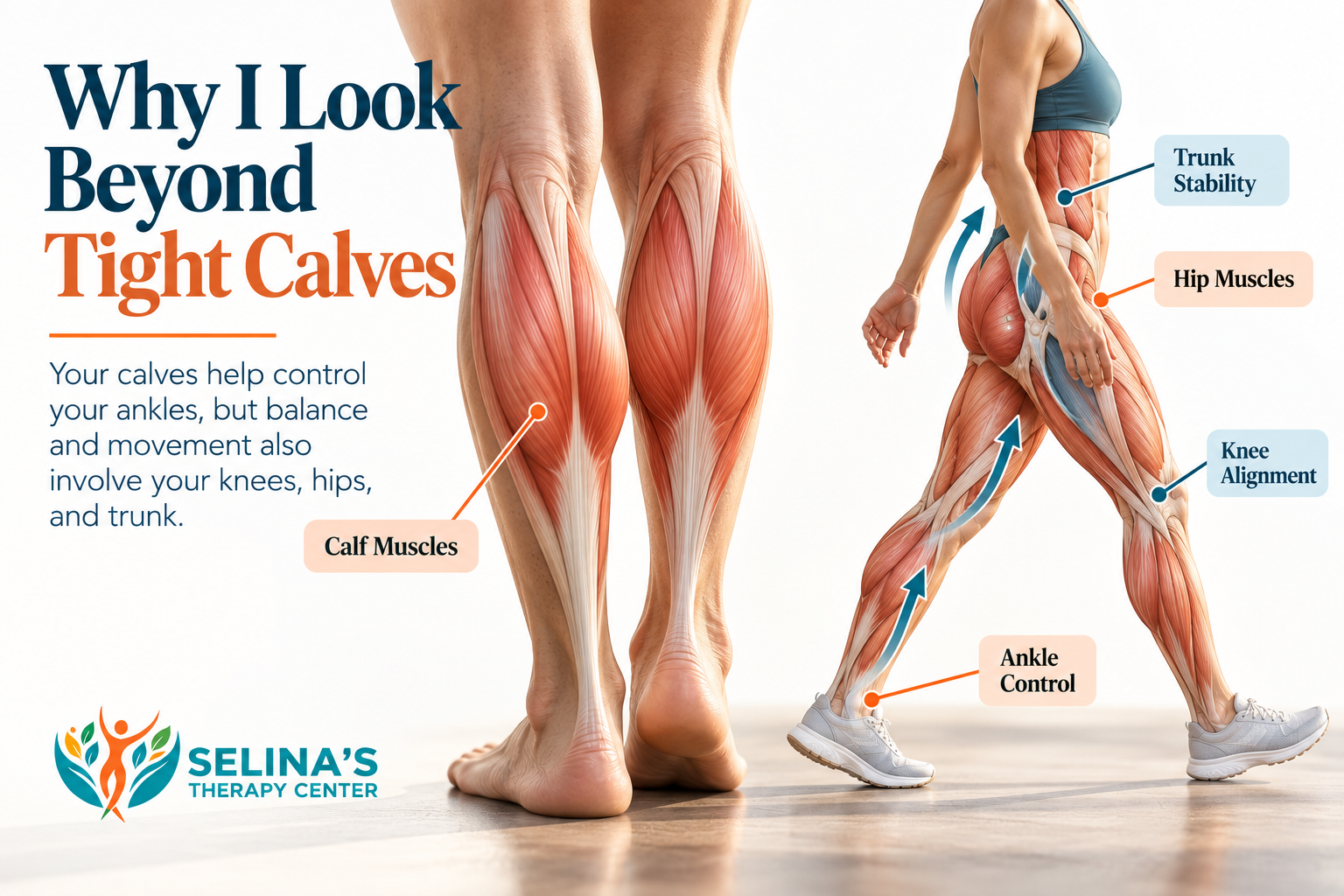
That doesn't mean tight calves are proof of a weak core. Activity load, footwear, ankle mobility, previous injuries, and medical conditions can all matter.
Rather than asking only, “How far can you stretch your calves?” I also ask, “How do you stand, walk, and balance?”
Stretching may still be helpful. The bigger question is whether we're also addressing what keeps making the area uncomfortable.
Why Your Neck and Shoulders Deserve the Same Approach
Your neck doesn't operate independently of your shoulders, rib cage, and trunk. When I work with someone who has persistent neck or upper trapezius tension—the familiar tightness across the tops of the shoulders—I look at those connections too.
Do they repeatedly lift their shoulders while working? Do they hold their head and neck in one position for long stretches? Are they bracing more than the task seems to require?
I'm not looking for one “perfect” posture. I'm looking for habits that may be demanding, uncomfortable, or difficult to vary.
Then I consider another often-overlooked factor: breathing.
How Breathing and Stress May Add to Neck Tension
The diaphragm is your primary breathing muscle. It sits beneath the lungs and contracts as you inhale. During comfortable, quiet breathing, the lower ribs and abdomen move naturally, with relatively little unnecessary effort around the neck and shoulders.
Muscles in the neck and upper chest can also help with breathing, particularly when respiratory demands increase. That is a normal, useful function. However, habitually using extra effort in those areas at rest may add to their workload.
In some clients, I notice the shoulders rising with each breath or visible tension around the neck. Gentle breathing awareness sometimes helps them recognize and ease that effort. It isn't a cure for neck pain, and upper-chest movement alone doesn't diagnose a breathing disorder.
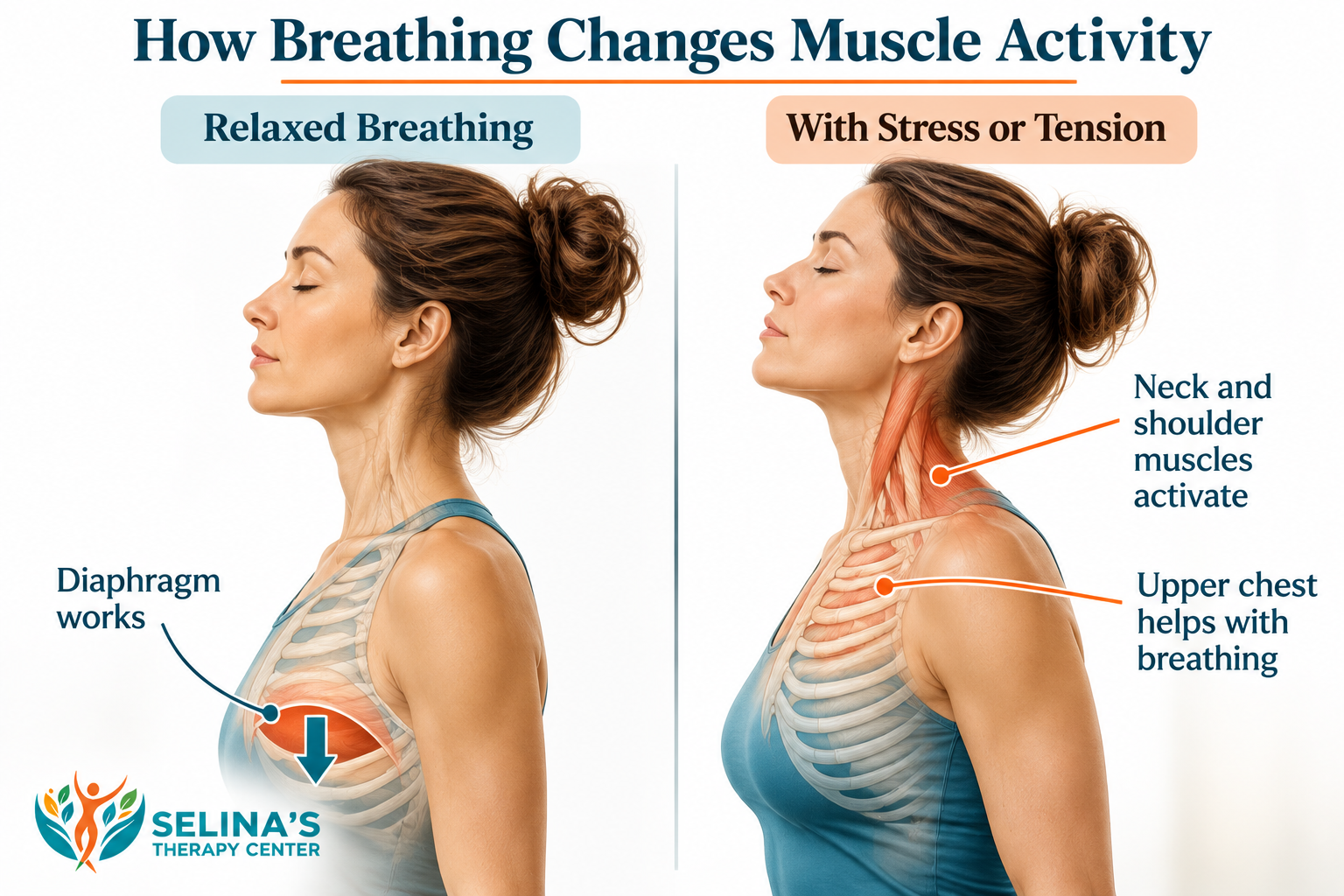
Stress can also change the way we breathe. Some people breathe faster, hold their breath while concentrating, or struggle to settle back into a comfortable rhythm after a stressful period. Clinical guidance recognizes stress and other triggers as possible contributors to altered breathing patterns.
That doesn't mean breathing difficulties are “just stress.” Persistent or unexplained breathlessness needs medical assessment.
The diaphragm also has a role in postural control. In one laboratory study, researchers found that it became active before the arm moved during a rapid shoulder movement. This helps explain why breathing belongs in a discussion about trunk support. It does not establish that altered breathing causes tight calves or neck pain.
A Gentle Breathing Check-In
If you're comfortable at rest, try this simple awareness exercise, adapted from physiotherapy guidance. It isn't a diagnostic test.
Lie on your back with your head and knees comfortably supported, or sit in a supported position.
Place one hand on your upper chest and the other on your lower ribs or abdomen.
Breathe gently through your nose, if comfortable. Notice how your ribs and abdomen move.
Let the breath leave without pushing it out. Allow your jaw, neck, and shoulders to soften.
Stay with a few easy breaths, without trying to make them bigger or “better.”
Some upper-chest movement is normal. You don't need to force your belly outward, hold your chest still, or consciously control every breath.
Stop if you feel dizzy, uncomfortable, or more breathless. If comfortable breathing is difficult, a qualified physical therapist or respiratory clinician can help assess what's happening.
Where Massage Fits—and What May Help Alongside It
As a massage therapist, I value the relief that skilled hands-on work can provide. In my practice, it can help clients feel more comfortable and more aware of where they're holding tension.
But relief and lasting change aren't always the same thing. If the daily demands or habits contributing to discomfort remain unchanged, symptoms may return.
That's why I often combine bodywork with movement work. Depending on the person, that may include mobility exercises, progressive strengthening, balance practice, or breathing awareness. We may also explore ways to vary positions and make everyday tasks feel less effortful.
There is no universal “tight calf” routine or “tense neck” fix. The approach needs to fit the person, their symptoms, and what they want to do comfortably.
Small Changes Need Practice, Not Constant Correction
Familiar movement habits can take time to change. A different way of standing, moving, or breathing may feel unfamiliar at first, even when it feels easier.
I encourage clients to focus on manageable changes rather than monitoring their bodies all day. That might mean taking movement breaks, practicing an appropriate strength exercise, or noticing unnecessary shoulder tension during a familiar task.
The goal isn't to brace your core constantly or hold yourself in a supposedly ideal position. It's to build strength, confidence, and more comfortable movement options that gradually become familiar.
When Tightness Needs Medical Attention
Not all calf or neck symptoms are a movement issue. Persistent or worsening pain, new weakness or numbness, and unexplained breathing difficulty warrant medical assessment.
New pain and swelling in one calf need urgent medical attention because they can be signs of a blood clot. If those symptoms occur with chest pain or shortness of breath, seek emergency care.
Massage, stretching, and breathing exercises should not delay appropriate medical evaluation.
Looking Beyond the Muscles That Hurt
When the same tightness keeps returning, I believe it's worth asking a broader question: What is this area being asked to do, and what else might be contributing?
Sometimes a muscle needs help relaxing. Sometimes the priority is strength, mobility, or changing a demanding habit. Often, we need to consider more than one factor. At Selina's Therapy Center, that's the philosophy behind my work: address the area that feels uncomfortable while also exploring how the body moves and works as a whole.
If recurring calf or neck tightness is getting in the way of your daily life, I'd be happy to discuss whether massage and movement work may be appropriate for you—and when another healthcare professional's assessment is the better next step.
Selina Sahba Massage Therapist, Personal Trainer, and Movement Specialist Selina's Therapy Center | Pacific Grove, California
References
1.. Practical guidance on breathing mechanics, accessory muscle use, and breathing awareness.
2.. Patient guidance on altered breathing patterns, stressors, and retraining.
3.. The Journal of Physiology, 1997;505:539–548.
4.. Symptoms and guidance on urgent and emergency assessment.
[1] Breathing pattern disorders and physiotherapy
[2] Breathing Pattern Disorder—Physiotherapy appointment
[3] Contraction of the human diaphragm during rapid postural adjustments
Educational note: This article shares general information and observations from my practice. It does not diagnose a condition or replace individualized medical advice.