Prenatal Massage: How Massage Can Help Your Body During Pregnancy
Pregnancy changes your body quickly.
Your center of gravity shifts. Your posture changes. Muscles begin working differently. Hips and the lower back may feel tighter. Sleep can become more difficult. Even areas that never bothered you before may suddenly demand attention.
Prenatal massage is designed around those changes.
It is not simply a regular massage performed on someone who happens to be pregnant. Positioning, pressure, comfort and the areas being treated all need to reflect what is happening in the body during pregnancy.

What Is Prenatal Massage?
Prenatal massage, also called pregnancy massage, is therapeutic massage adapted specifically for the needs of a pregnant client.
The massage itself can incorporate different techniques depending on the individual, but comfort and appropriate positioning become especially important as pregnancy progresses.
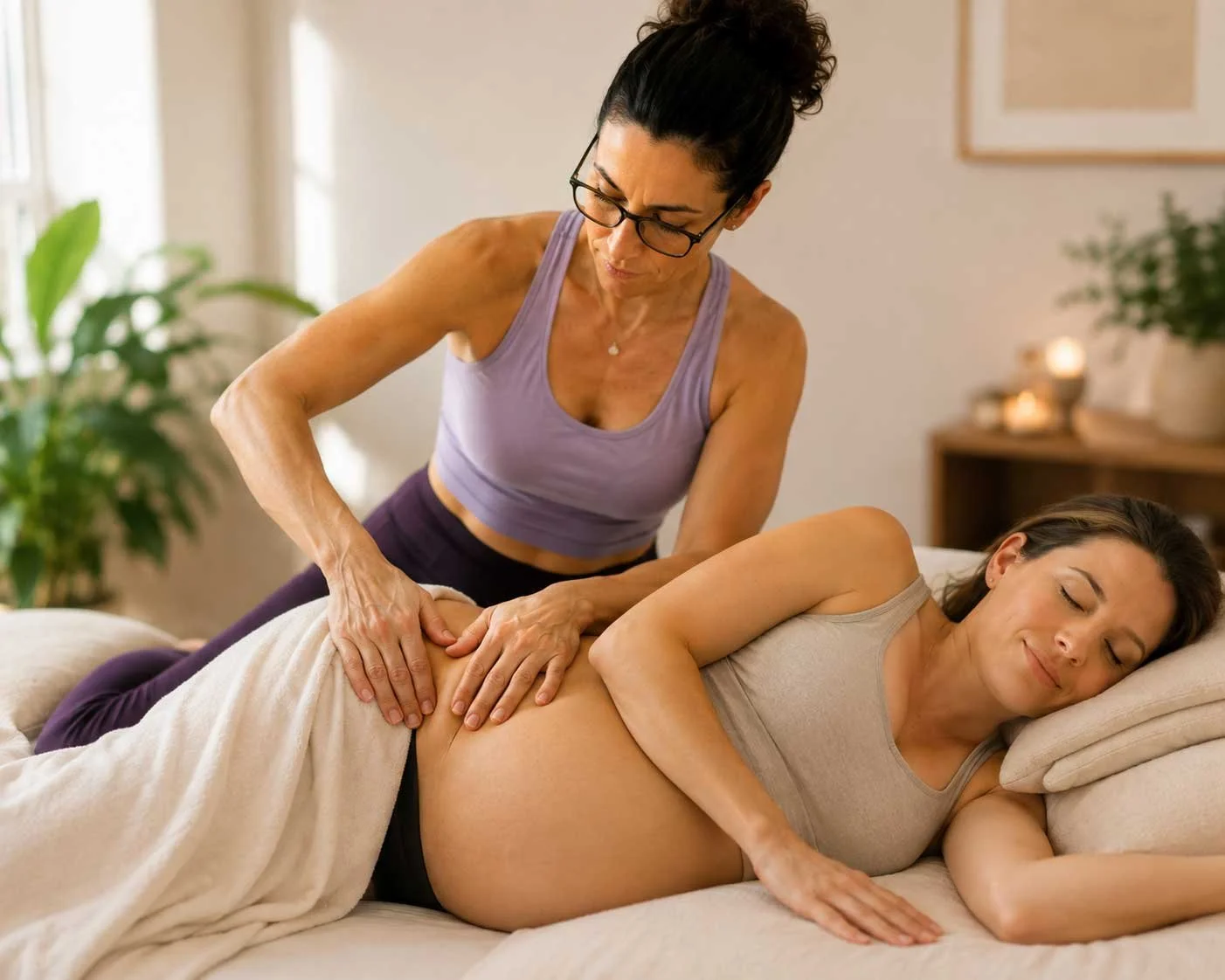
For many clients, that means spending much of the massage comfortably supported in a side-lying position with pillows and bolsters.
The goal is simple. Give the body useful therapeutic work without asking it to tolerate positions or pressure that no longer feel appropriate.
Why Does Pregnancy Cause So Much Muscle Tightness?
Your body is adapting to a constantly changing load.
As your abdomen grows, your center of mass moves forward. The pelvis and spine have to accommodate that change. Muscles around the hips, lower back, shoulders and neck may begin doing more work simply to maintain comfortable posture and movement.
Hormonal changes during pregnancy also affect connective tissues and joint mobility.
The result can be a combination of muscle fatigue, tension and areas that feel persistently tight.
This is one reason I look beyond the spot that hurts.
If your lower back is uncomfortable, for example, the lower back may not be the only area worth addressing. The hips, glutes, surrounding musculature and changing movement patterns may all be contributing.
What Can Prenatal Massage Help With?
Many pregnant clients seek massage because they are experiencing muscular tension, general aches, fatigue or simply difficulty getting comfortable.
Massage may help with:
Neck and shoulder tightness.
Muscular fatigue.
General feelings of stiffness.
Getting more comfortable in a rapidly changing body.
Some clients also find the quiet, slower pace of massage valuable in itself.
Pregnancy can place significant physical and emotional demands on the body. Having an hour where you can be comfortably supported and do very little can feel remarkably restorative.
Prenatal Massage Is Not One-Size-Fits-All
Every pregnancy is different.
One person may arrive with significant hip and lower-back tension. Another may be struggling with her upper back and shoulders. Someone else may simply feel tired and want gentle, calming bodywork.
That is why I do not believe every prenatal massage should follow exactly the same routine.
The massage should respond to the person on the table.
Pressure can be adjusted. Positioning can be changed. Areas can be prioritized based on what your body is experiencing that day.
Why Positioning Matters
This is one of the biggest differences between prenatal massage and traditional massage.
As pregnancy progresses, lying face down becomes impractical. Prolonged flat-on-the-back positioning may also be inappropriate or uncomfortable later in pregnancy.
Side-lying massage allows us to work therapeutically while keeping the body supported.
Pillows and bolsters can support the abdomen, hips, legs and upper body so you are not using muscular effort simply to maintain your position.
Good prenatal massage should not feel like you are trying to endure the massage table.
You should feel supported by it.
Can Prenatal Massage Still Address Tight Muscles?
Yes. Prenatal massage does not necessarily mean extremely light massage.
The appropriate amount of pressure depends on the client, the area being treated, the stage of pregnancy and individual circumstances.
There is an important distinction between thoughtful therapeutic pressure and simply pushing harder.
My approach has always been to use the amount of pressure that makes sense for the tissue and the person.
Sometimes that means deeper muscular work. Sometimes the nervous system and body respond better to something slower and gentler.
Often, it is a combination.
Pregnancy, Hypermobility and Joint Stability
Pregnancy can be particularly interesting for people who are already naturally flexible or hypermobile.
Hormonal changes associated with pregnancy can increase ligamentous laxity. If your joints already have more movement than average, simply trying to become more flexible may not be what your body needs.
In these situations, muscle tightness can sometimes be protective. A muscle may be working harder because it is helping stabilize an area that does not have enough passive stability.
This is one reason I am cautious about treating every feeling of tightness as something that simply needs to be stretched or aggressively released.
Sometimes we need to understand why the muscle became tight in the first place.
The Nervous System Matters During Pregnancy Too
Massage affects more than muscles.
Slow, comfortable touch and a quiet environment can create an opportunity for the body to shift away from constant activity and muscular guarding.
This is especially relevant during pregnancy, when sleeping comfortably may become harder and the body is continuously adapting.
My approach to bodywork considers both the musculoskeletal system and the nervous system.
I want the tissue to respond, but I also want the person receiving the massage to feel safe enough and comfortable enough to stop bracing.
Those two things often work together.
Is Prenatal Massage Safe?
Prenatal massage is generally considered appropriate for many healthy pregnancies when performed with pregnancy-specific modifications. However, pregnancy also introduces situations where massage may need to be modified, postponed or cleared by your medical provider.
If you have a high-risk pregnancy, significant or sudden swelling, bleeding, severe headache, signs of a blood clot, preeclampsia or another pregnancy complication, talk with your physician, midwife or other qualified prenatal healthcare provider before scheduling massage.
Massage should complement appropriate prenatal medical care, not replace it.
Prenatal Massage in Pacific Grove and Monterey
At Selina's Therapy Center in Pacific Grove, prenatal massage is individualized around the person receiving it.
I bring more than two decades of experience in massage, movement and working with the way muscles and joints interact.
That combination is particularly useful during pregnancy because your body is not static. It is adapting.
The goal is not simply relaxation, although relaxation can be an important part of the experience.
The goal is to help you feel more comfortable, supported and at home in your changing body.