Lymphatic Massage: Why This Gentle Massage Works So Differently
When people think of therapeutic massage, they often think of pressure. Deep tissue work. Tight muscles. Trigger points. Fascia. Working into areas that hurt.
Lymphatic massage is different.
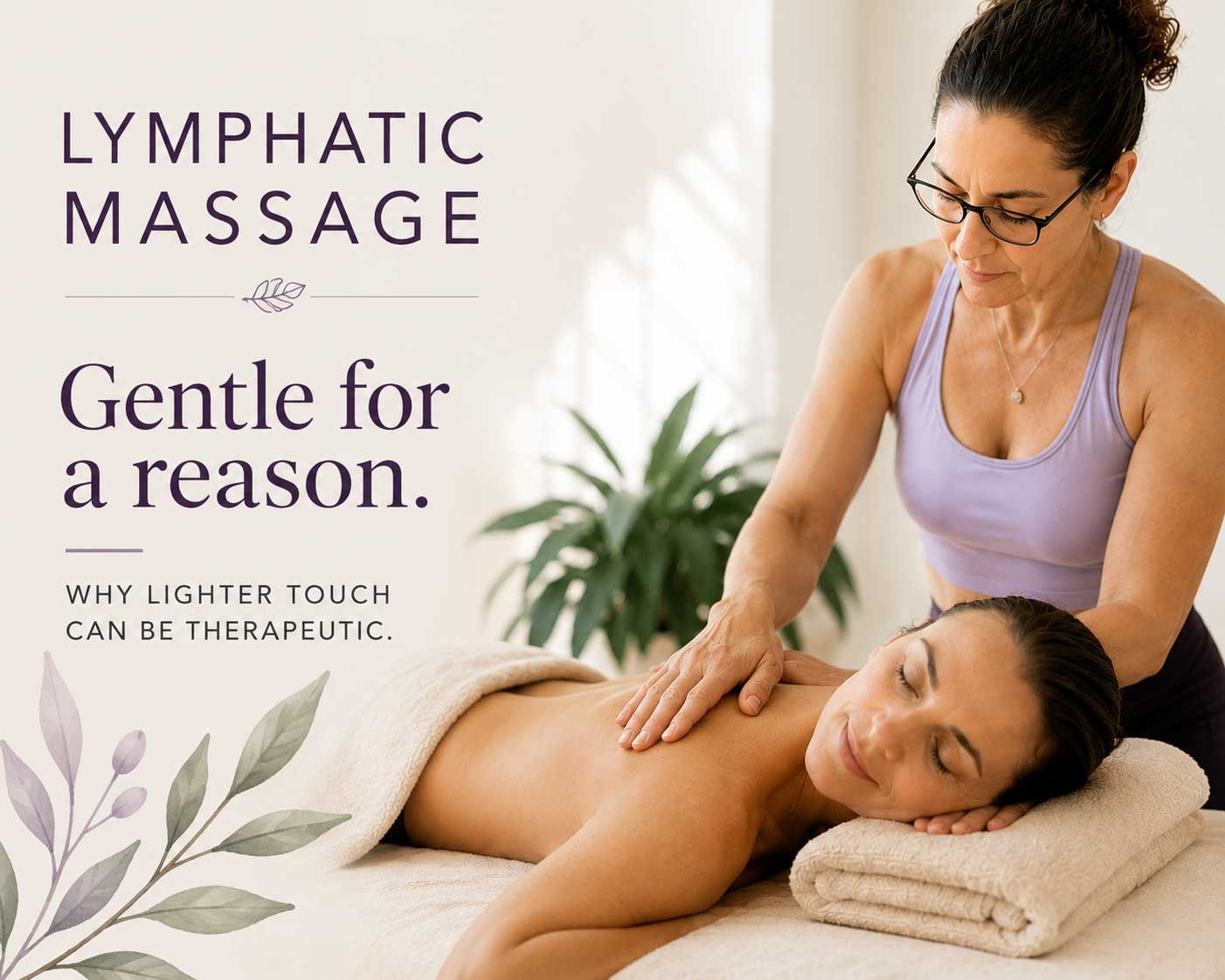
It uses a much lighter, slower approach because the goal is not to manipulate muscle tissue.
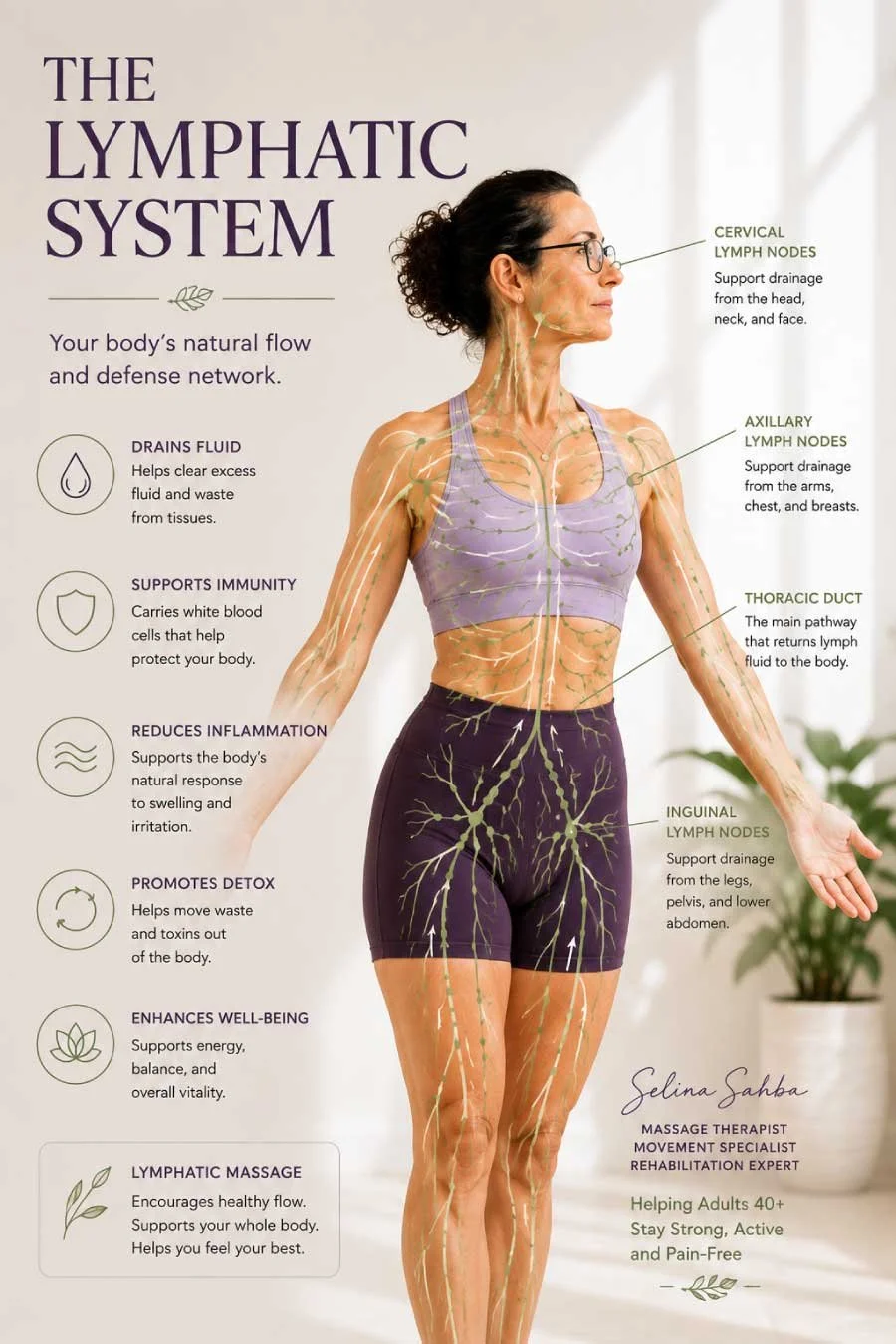
The focus is the lymphatic system, a network that helps move fluid through the body and plays an important role in immune function and maintaining fluid balance.
For the right person, lymphatic massage can be a valuable addition to therapeutic bodywork. But understanding how it works helps explain why more pressure is not necessarily better.
What Is Lymphatic Massage?
Lymphatic massage, often called lymphatic drainage massage or manual lymphatic drainage, uses gentle, rhythmic movements intended to encourage the movement of lymphatic fluid.
Unlike blood, which is continuously pumped through the body by the heart, the lymphatic system does not have its own central pump. Movement, breathing and muscle contractions all help move lymph through lymphatic vessels. This is one reason lymphatic massage looks and feels so different from conventional massage. The lymphatic structures being addressed are relatively superficial, so aggressive pressure is not the objective.
In fact, pushing harder does not automatically make lymphatic work more effective.
Lymphatic Massage vs. Deep Tissue Massage
These two forms of massage can both be therapeutic, but they are designed to accomplish very different things.
Deep tissue and therapeutic massagemay focus on muscles, fascia, restricted movement, tension patterns and areas of pain.
A deep tissue session may involve substantial pressure. Lymphatic work can feel almost surprisingly light by comparison. That difference is intentional. Good bodywork is not about using as much pressure as possible. It is about choosing the appropriate technique for the tissue and the goal.
Why I Take a Whole-Body Approach
The body does not operate as a collection of isolated parts.
Fluid movement, breathing, muscle activity, circulation, movement and the nervous system all interact.
That is why my approach to lymphatic massage looks at more than the area where someone notices swelling, heaviness or discomfort.
I also pay attention to how the entire body is responding.
Breathing. Guarding. Muscle tension. Sensitivity. Stress. How easily someone can relax into the work.
After more than two decades working with bodies through both massage therapy and movement, I have learned that sometimes the most effective work is not the most aggressive work.
Sometimes the body needs less input, not more.
The Nervous System Matters Too
One of the things I value about slower, gentle bodywork is the opportunity it gives the nervous system to settle.
Many people spend an extraordinary amount of time in a state of physical tension. Their shoulders are elevated. Their breathing is shallow. Muscles remain subtly contracted even when they are resting.
A slow lymphatic massage creates a very different sensory experience from intense bodywork.
The pace is deliberate. The pressure is gentle. There is no need to brace against the therapist.
For people who are particularly sensitive to touch or easily overwhelmed by aggressive massage, this can be especially important.
The goal is not to force the body into relaxation. It is to create conditions that allow the body to relax.
Who Might Consider Lymphatic Massage?
People seek lymphatic drainage massage for many different reasons.
Some are dealing with a feeling of puffiness, heaviness or temporary fluid retention. Others are interested in lymphatic work during recovery from certain procedures, when massage has been cleared by their medical provider.
Some simply prefer gentle bodywork and find traditional massage pressure uncomfortable.
Lymphatic massage may also appeal to people who feel physically sensitive or who want bodywork that emphasizes relaxation and whole-body regulation rather than intensive muscular work.
It is important to remember that swelling can have many causes. New, unexplained, painful or significant swelling should be medically evaluated rather than simply treated with massage.
Is Lymphatic Massage Only for Swelling?
No. This is one of the misconceptions I often see around lymphatic work.
Although fluid movement is central to lymphatic massage, you do not necessarily have to arrive visibly swollen to appreciate this style of bodywork.
Some people choose it because they want a much gentler massage experience. Others are interested in supporting normal lymphatic movement, particularly during periods when they have been less active.
And for some people, the biggest difference they notice is simply how they feel after a session.
Calmer. Less guarded. More comfortable in their body.
Individual responses vary, which is why I prefer to look at the person in front of me rather than promise a predetermined result.
Can Lymphatic Massage Be Combined With Other Massage Techniques?
Yes, and this is where having access to different styles of bodywork becomes particularly useful.
Not every client fits neatly into one category. Someone may benefit from gentle lymphatic work but also have muscular tension, fascial restrictions or movement patterns that need attention.
Another person may need a primarily therapeutic massage with portions of the session performed more gently.
The technique should serve the person, rather than forcing every person into the same massage protocol.
My background includes therapeutic massage, deep tissue work, myofascial techniques, movement and rehabilitation-focused training. That allows me to consider what type of input makes sense for the body I am working with that day.
Sometimes that means deeper work. Sometimes it means lymphatic techniques. Sometimes the best session includes elements of both.
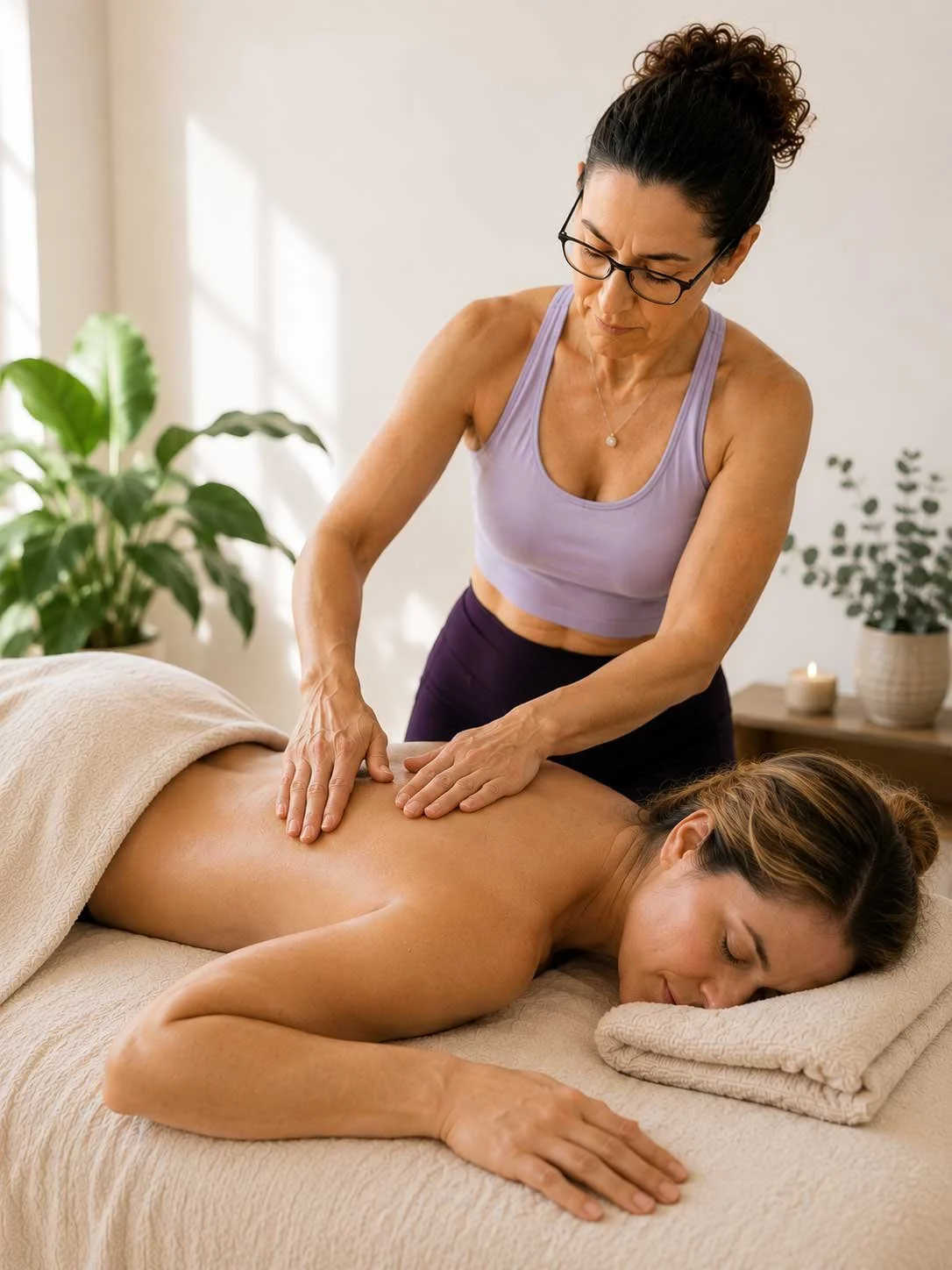
This may be the most important takeaway. Massage does not have to hurt to be therapeutic. There are situations where deeper pressure is appropriate. There are also situations where the body responds better to slow, light, intentional touch.
Lymphatic massage is a perfect example.
Its gentleness is not a watered-down version of therapeutic massage. The gentleness is part of the technique.
Understanding that distinction can completely change the way you think about bodywork.
Lymphatic Massage in Pacific Grove
At Selina's Therapy Center in Pacific Grove, I approach massage from the perspective that every body deserves an individualized session.
Some people need muscular work. Some need help with mobility and movement. Some respond best to slow, calming bodywork. Others may benefit from a combination.
If you are looking for lymphatic massage in Pacific Grove or the Monterey Peninsula, we can discuss what you are experiencing and whether lymphatic massage, therapeutic massage or a combination of techniques makes the most sense for you.
The goal is not simply to choose a massage from a menu.
It is to figure out what your body needs.