The Shoulder Brace I’ve Been Using During My Shoulder Injury
When you’re dealing with a shoulder injury, sometimes a little extra support can make everyday movement feel much more manageable.
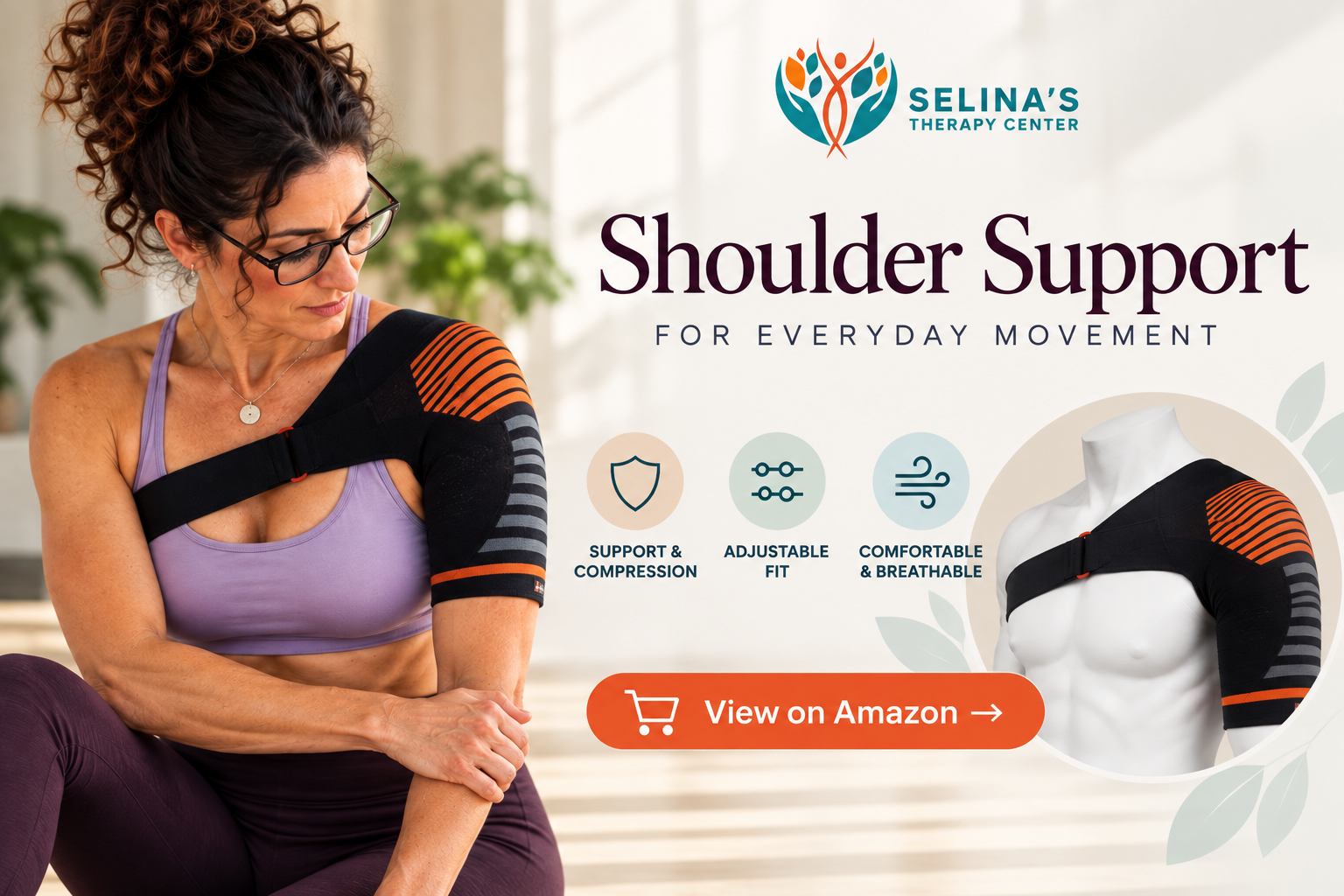
I’ve been working through a shoulder injury recently, and one product that has genuinely helped me is this adjustable shoulder support brace from VTG SUPPORT.
I don’t look at a brace as something that fixes an injured shoulder. It doesn’t replace rehabilitation, appropriate exercise, physical therapy, or medical care. What I like about this one is much simpler. It gives my shoulder a little extra support and compression when I need it.
Why I Started Wearing a Shoulder Brace
One of the frustrating things about a shoulder injury is that you still have to use your arm.
Reaching, working, exercising, carrying things, and even normal daily movements can repeatedly load an irritated shoulder. In my case, I wanted something that could provide some support without completely immobilizing my arm.
That distinction matters.
The goal isn’t to stop the shoulder from moving. Current clinical practice guidelines for rotator cuff related shoulder pain emphasize active rehabilitation, including motor control and resistance exercise, rather than relying solely on passive treatments.
I wanted something that made my shoulder feel a little more supported while still allowing me to move.
What I Like About This Shoulder Brace
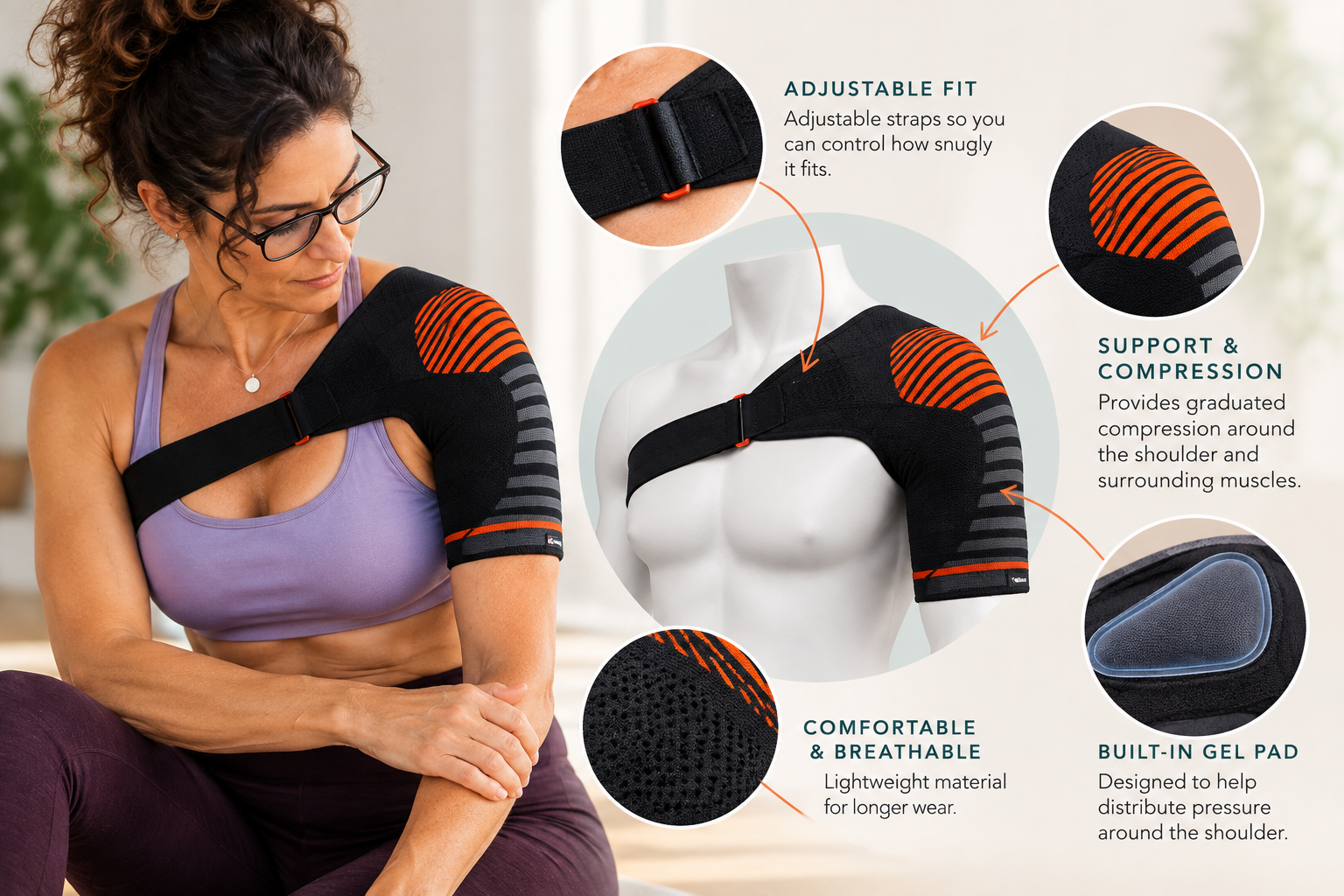
The brace uses adjustable straps, so I can control how snugly it fits rather than being locked into one level of compression.
It also wraps around the shoulder instead of simply squeezing the upper arm. The manufacturer describes it as providing graduated compression around the shoulder and surrounding muscles. It also includes a built-in gel pad designed to help distribute pressure around the shoulder.
For me, though, the most important feature is simply how it feels.
When I wear it, my shoulder feels more supported and secure. I’m also more aware of the shoulder while I’m moving.
There is some research behind the idea that compression can influence joint position awareness. A 2024 systematic review and meta-analysis of 27 studies involving 671 participants found that compression garments improved one measure of joint position sense, although other proprioception measures did not show significant improvements.
Research specifically involving the shoulder is limited. One study of compressive shoulder bracing found improved passive shoulder position sense while participants wore the brace. However, a broader systematic review of shoulder rehabilitation found that evidence supporting bracing for proprioceptive rehabilitation was not strong.
So I don’t wear the brace because I expect it to rehabilitate my shoulder. I wear it because the compression and support feel helpful to me while I’m moving through my day.
Support Without Completely Restricting Movement
This is probably the biggest reason I’ve continued using it.
I don’t want my shoulder locked into one position all day. I want to maintain comfortable movement while being more conscious of how I’m using the joint.
The brace gives me that middle ground.
It provides compression and support, but I can still move my arm and go about my day. The material is also relatively lightweight and breathable, which makes it more practical for wearing for longer periods.
A Brace Is a Tool, Not a Treatment
This part is important.
A shoulder brace can provide support, but it cannot diagnose an injury or repair a damaged tendon, labrum, joint, or other structure.
Shoulder injuries can also affect the body's awareness of movement and joint position. A systematic review of shoulder injuries and kinaesthesia found evidence of impaired movement sense in some people with shoulder disorders, particularly following traumatic shoulder instability.
That is one reason proper rehabilitation matters.
For common rotator cuff related shoulder pain, current rehabilitation guidelines recommend an active exercise program as an important part of nonsurgical treatment.
I use this brace as one tool while I work through my own shoulder injury. I still pay attention to load, range of motion, strength, recovery, and how my shoulder responds to different activities.
Who Might Find a Shoulder Brace Useful?
A supportive brace may be worth considering when you want some additional compression and support around the shoulder during everyday activities or while gradually returning to activity.
It can also be useful on days when the shoulder simply feels like it needs a little more support.
The important thing is not to let a brace give you false confidence. Feeling supported does not necessarily mean an injured shoulder is ready for heavier loads or movements that still aggravate it.
The Shoulder Brace I’m Using
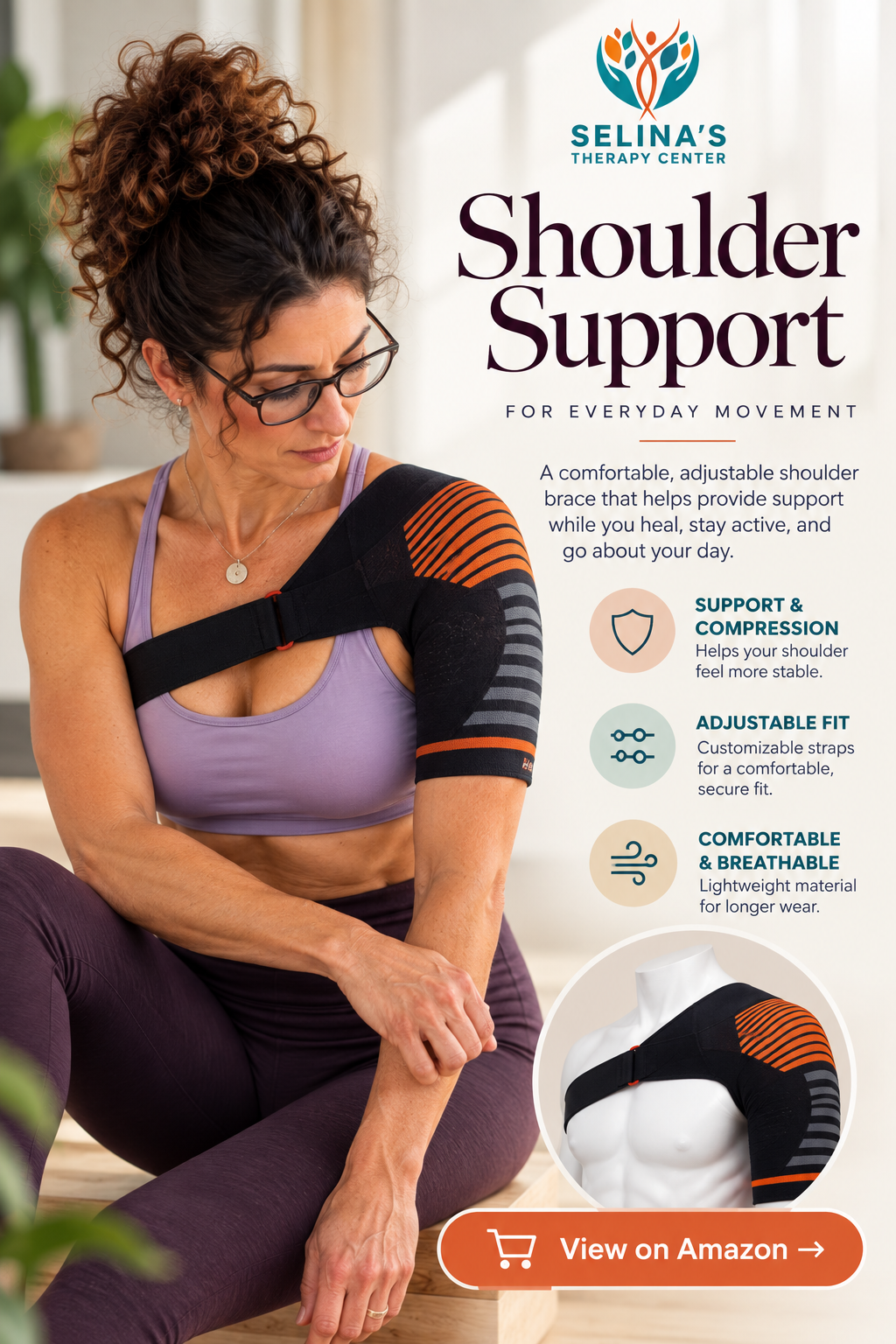
The specific one I’ve been wearing is the VTG SUPPORT Adjustable Shoulder Brace with Shock-Absorbing Gel Pad.
It is adjustable, can be worn on either shoulder, and is designed to provide compression while still allowing shoulder movement.
Most importantly, it has been genuinely useful for me. That is why I’m comfortable adding it to my recommended products rather than recommending something I haven’t personally used.
Disclosure: This page contains an affiliate link. If you purchase through this link, Selina’s Therapy Center may earn a small commission at no additional cost to you.
This information is educational and is not intended to diagnose or treat an injury. If you have persistent or significant shoulder pain, consult an appropriate healthcare professional.